
How Many kWh Does an EV Charger (Level 2, 240V) Use?
EV Charger (Level 2, 240V) energy cost calculator - see your exact daily, monthly, and yearly electricity cost.
US national average. Edit for your local rate.
Charger Level Preset
Monthly Charging Estimate
390 kWh / $71.41 per month
About $0.07 per mile
Based on your miles and efficiency. Includes 7% charging losses.
Daily Energy Use
28.80
kWh / day
Monthly Cost
$156.90
Yearly Cost
$1908.98
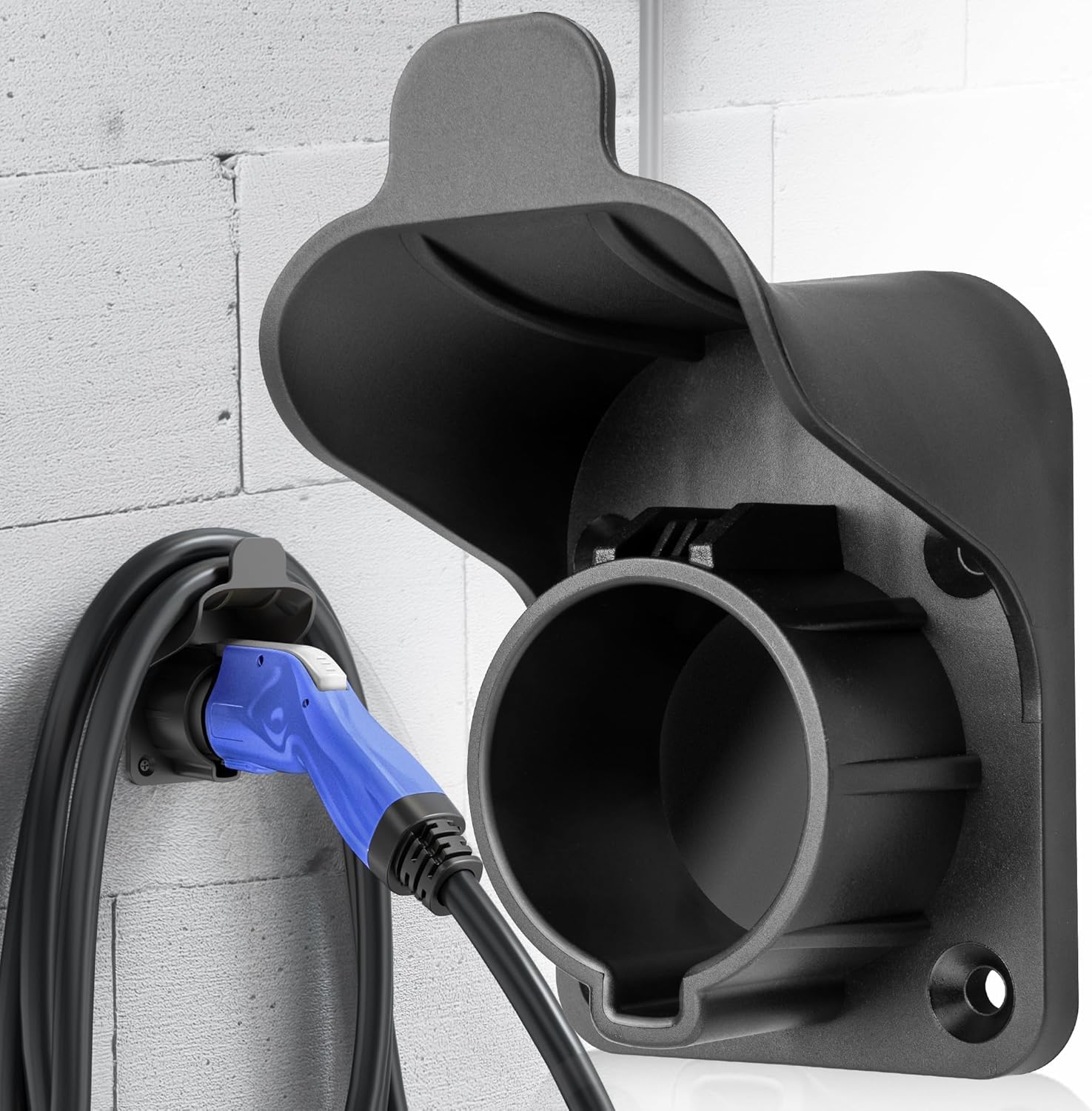
Protect the cable, protect your investment
MECMO EV Charger Holder - J1772 Wall Mount Holster
Why this matters
A Level 2 charging cable left coiled on the garage floor gets run over, kinked, and damaged. A damaged cable means resistance, heat, and wasted electricity on every charge, not to mention a $200+ replacement. This wall-mount holster keeps your J1772 connector docked properly and the cable off the ground. Cheap insurance for a $500+ charger installation.
Check Price on Amazon →As an Amazon Associate, we earn from qualifying purchases.
EV Charger (Level 2, 240V) - Cost Breakdown
| Period | kWh Used | Cost ($) |
|---|---|---|
| Per Hour | 7.2000 | $1.3075 |
| Per Day | 28.80 | $5.23 |
| Per Month (30 days) | 864.00 | $156.90 |
| Per Year (365 days) | 10512.00 | $1908.98 |
Charging an EV for 4 hours uses about the same energy as running a central AC system for 8 hours.
3 Ways to Cut Your EV Charger (Level 2, 240V) Energy Bill
- 🌱
Schedule charging to start during off-peak hours (typically midnight–6am) to take advantage of lower electricity rates.
- 💡
Set the charge limit to 80% for daily driving — charging the last 20% is slower and less efficient.
- ⚡
Precondition the car's cabin while still plugged in to use grid power instead of draining the battery for heating/cooling.
Level 2 EV chargers draw stable, high wattage with no surge — the onboard charger regulates power flow smoothly.
Electrical Requirements for an EV Charger (Level 2, 240V) (NEC 2023)
Last Updated: October 2026 | Reviewed by James Vance, Licensed Master Electrician
| Requirement | Specification | Get It |
|---|---|---|
| Circuit Voltage | 240V (dedicated circuit) | - |
| Minimum Breaker Size | 50A double-pole (40A continuous × 125% = 50A) | Shop breakers |
| Minimum Wire Size | 6 AWG copper (50A double-pole circuit) | Shop wire |
| Receptacle Type | NEMA 14-50R (or hardwired - recommended) | - |
For reference only per NEC 2023. Always confirm with a licensed electrician per your local code.
EV chargers run at full load for hours, which is exactly what the 125% continuous-load rule was written for. I've seen melted 40-amp breakers on 40-amp chargers - the 50-amp breaker isn't optional.
EV Charger (Level 2, 240V) Wiring FAQs
What size breaker for a 40 amp EV charger?
A 40-amp Level 2 EV charger demands a 50-amp double-pole breaker according to NEC 2023. Because charging sessions run for hours at maximum current, the load qualifies as continuous and must be sized at 125%: 40 multiplied by 1.25 equals exactly 50 amps. Never undersize this breaker.
What gauge wire for a 50 amp EV charger circuit?
Pull 6 AWG copper wire for a 50-amp EV charger circuit, which fully supports the 50-amp rating under NEC Table 310.16. Where the distance from panel to charger exceeds 100 feet, perform a voltage drop calculation and consider upsizing to 4 AWG copper for improved efficiency and cooler operation.
Should I hardwire my EV charger or use a plug?
Hardwiring remains the recommended approach because it removes the receptacle as a potential failure point, and numerous current charger models mandate a hardwired connection by design. Should you choose a NEMA 14-50R outlet instead, use only industrial-grade devices, as inexpensive receptacles overheat dangerously under sustained charging loads.
Not sure about distance? Use our Wire Size Calculator and Voltage Drop Calculator to confirm for your run length.
How Much Electricity Does a Level 2 EV Charger Use?
A Level 2 EV charger itself does not consume electricity; it delivers power to your car's battery. What matters is how much energy your EV needs. The median electric vehicle uses about 39 kWh per 100 miles (EPA/DOE data for model year 2025), so driving 1,000 miles per month adds roughly 390 kWh to your electric bill.
At the national average of 18.31 cents per kWh (EIA, July 2026), that 1,000 miles costs about $71 in electricity. Compare that to a 30 MPG gasoline car: 1,000 miles needs 33 gallons, costing roughly $115 at $3.50 per gallon.
The charger wattage (typically 7,200W for a 30A Level 2 unit) determines how fast you charge, not how much total energy you use. A higher-wattage charger fills the battery faster but delivers the same kWh for the same miles driven.
EV Charging Levels and Their Power Draw
Charging speed depends on the power level. Total energy per mile stays roughly the same regardless of level.
| Level | Power | Miles/Hour | Notes |
|---|---|---|---|
| Level 1 (120V, 12A) | 1,440W | 3-5 | Standard outlet. Adds ~40 miles overnight. No installation needed. |
| Level 2 (240V, 30A) | 7,200W | 20-30 | Most common home setup. Full charge overnight for most EVs. |
| Level 2 (240V, 48A) | 11,500W | 35-45 | Faster home charging. Requires 60A circuit. Check your car's max acceptance rate. |
| DC Fast Charging | 50,000W+ | 150+ | Public stations only. Not a home installation. Higher per-kWh cost. |
Worked Cost Examples
All examples use 18.31 cents per kWh (EIA, July 2026) and the median 39 kWh/100 miles efficiency.
Average driver: 1,000 miles/month
1,000 miles x 0.39 kWh/mile = 390 kWh. 390 x $0.1831 = $71.41/month.
Commuter: 1,500 miles/month
1,500 x 0.39 = 585 kWh. 585 x $0.1831 = $107.11/month.
Efficient EV (4.0 mi/kWh): 1,000 miles
1,000 / 4.0 = 250 kWh. 250 x $0.1831 = $45.78/month.
Less efficient SUV (2.5 mi/kWh): 1,000 miles
1,000 / 2.5 = 400 kWh. 400 x $0.1831 = $73.24/month.
Full charge: 75 kWh battery
75 kWh x $0.1831 = $13.73 per full charge (before charging losses of ~5-10%).
Gasoline comparison: 1,000 miles
EV: $71. Gas car at 30 MPG and $3.50/gal: 33.3 gal x $3.50 = $117. Savings: ~$46/month.
How to Calculate Your Own EV Charging Costs
Step 1: Find your EV's efficiency.
Check the Monroney label or fueleconomy.gov for your model's kWh/100 miles rating. The MY2025 median is 39 kWh/100 miles. Efficient sedans may be under 30; large SUVs can exceed 45.
Step 2: Estimate your monthly miles.
Check your odometer over a month, or use your daily commute times 22 working days plus weekend driving.
Step 3: Calculate monthly kWh.
Monthly kWh = (monthly miles / 100) x kWh per 100 miles. Add 5-10% for charging losses (heat in the charger and battery).
Step 4: Multiply by your rate.
Use your all-in electricity rate from your bill (total bill divided by total kWh). If you have time-of-use rates, use your off-peak overnight rate since most EV charging happens at night.
A note on measurement: Most Level 2 chargers have built-in energy metering accessible via app. If yours does not, a plug-in monitor cannot measure a 240V hardwired charger. Have an electrician install a submeter, or rely on your car's reported kWh added per session.
Time-of-Use Rates Can Cut Costs Dramatically
Many utilities offer cheaper overnight electricity rates, sometimes half the daytime price. Since most EV owners charge overnight, switching to a time-of-use plan is often the single biggest way to reduce charging costs.
For example, if your utility charges 30 cents per kWh during peak hours but 12 cents overnight, charging 390 kWh at night costs $46.80 instead of $117 at peak rates. Check your utility's EV rate plans; some offer EV-specific tariffs.
Smart chargers can schedule charging to start automatically during off-peak hours, so you do not have to remember to plug in at midnight.
Practical Ways to Reduce EV Charging Costs
Charge overnight on off-peak rates.
This is the highest-impact change. Off-peak rates can be 40-60% cheaper than standard residential rates.
Do not charge to 100% daily unless needed.
Most manufacturers recommend 80% for daily use. It reduces battery degradation and slightly improves charging efficiency.
Precondition while plugged in.
Heating or cooling the cabin while still connected to the charger uses grid power instead of battery, preserving range.
Keep tires properly inflated.
Underinflated tires increase rolling resistance and energy consumption per mile, just like a gasoline car.
Drive efficiently.
Aggressive acceleration and high speeds increase kWh per mile significantly. Gentle driving can improve efficiency by 15-20%.
Check if your utility has EV rebates.
Many utilities offer rebates for Level 2 charger installation or discounted EV charging rates. These programs change frequently, so check your utility's website.
Useful Comparisons
EV vs gasoline cost per mile: At 39 kWh/100 miles and 18.31 cents/kWh, an EV costs about 7.1 cents per mile in electricity. A 30 MPG gas car at $3.50/gallon costs 11.7 cents per mile in fuel.
Level 1 vs Level 2 total energy: Both deliver the same kWh for the same miles. Level 2 is slightly more efficient due to shorter charging sessions (less standby power), but the difference is small, typically 2-5%.
EV charging vs whole home: The average US home uses about 877 kWh/month (EIA). Adding 390 kWh for EV charging increases total consumption by about 44%.
Charging losses: About 5-10% of the electricity drawn from the wall is lost as heat during charging. A 75 kWh battery fill actually draws about 80-83 kWh from the grid.
EV Charger Energy FAQs
How many kWh does it take to charge an electric car?
It depends on the battery size and how depleted it is. A typical 75 kWh battery charged from 20% to 80% needs about 45 kWh from the battery's perspective, or roughly 48-50 kWh from the wall after charging losses.
How much does it cost to charge an EV at home per month?
For 1,000 miles per month at median efficiency (39 kWh/100 miles) and 18.31 cents per kWh, expect about $71 per month. Your cost varies with miles driven, vehicle efficiency, and local rates.
Does a Level 2 charger use more electricity than Level 1?
No. Both deliver the same total kWh for the same miles driven. Level 2 delivers it faster (higher watts) but for less time. Total energy consumption is essentially identical.
How many watts does a Level 2 EV charger use?
A typical 30A Level 2 charger draws 7,200 watts at 240V. Higher-amperage units (40A, 48A) draw 9,600W and 11,500W respectively. The car only draws what its onboard charger can accept.
Is it cheaper to charge an EV at night?
Often yes. Many utilities offer time-of-use rates with significantly cheaper overnight electricity. Charging during off-peak hours can cut costs by 40-60% compared to standard rates.
How much will an EV add to my electric bill?
For the average driver (1,000 miles/month), expect 300-400 kWh added monthly, costing $55-75 at average rates. This is roughly a 35-45% increase over the typical household's baseline usage.