
How Many kWh Does a Hot Tub / Spa Use?
Hot Tub / Spa energy cost calculator - see your exact daily, monthly, and yearly electricity cost.
US national average. Edit for your local rate.
Hot Tub Type Preset
Illustrative estimates. Adjust watts and hours for your specific spa.
Daily Energy Use
12.00
kWh / day
Monthly Cost
$65.38
Yearly Cost
$795.41
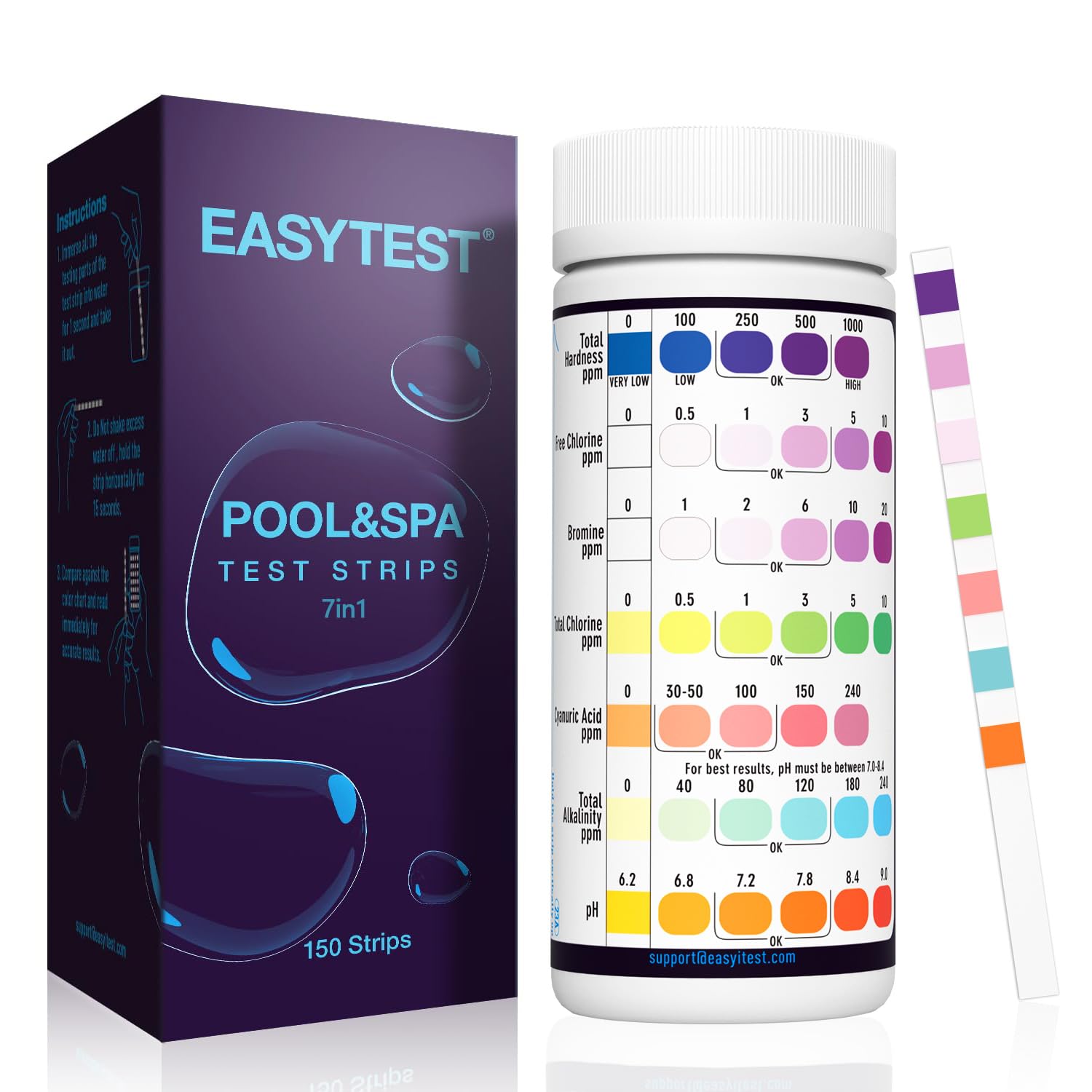
Balanced water = less heater runtime
EASYTEST 7-Way Pool and Spa Test Strips (150 Count)
Why this saves energy
Here is something most hot tub owners do not realize: unbalanced water chemistry makes your sanitizer work harder and forces more frequent water changes. Every drain-and-refill means reheating 300+ gallons from cold, which is the single most expensive thing a hot tub does. Testing twice a week with these strips keeps your chemistry dialed in, your water lasting longer, and your heater cycling less.
Check Price on Amazon →As an Amazon Associate, we earn from qualifying purchases.
Hot Tub / Spa - Cost Breakdown
| Period | kWh Used | Cost ($) |
|---|---|---|
| Per Hour | 3.0000 | $0.5448 |
| Per Day | 12.00 | $2.18 |
| Per Month (30 days) | 360.00 | $65.38 |
| Per Year (365 days) | 4380.00 | $795.41 |
Running a hot tub for 4 hours uses about the same energy as running an electric oven for nearly 5 hours.
3 Ways to Cut Your Hot Tub / Spa Energy Bill
- 🌱
Keep a high-quality insulated cover on at all times when not in use — most heat loss is from the water surface.
- 💡
Lower the set temperature by 2–3°F when not using it for extended periods rather than turning it off and reheating completely.
- ⚡
Ensure the cabinet panels are intact and insulation isn't waterlogged, as wet insulation loses its R-value.
The heater element draws stable, high wattage, but the jet pump motor surges to about 5,000–7,000W at startup.
Electrical Requirements for a Hot Tub / Spa (NEC 2023)
Last Updated: October 2026 | Reviewed by James Vance, Licensed Master Electrician
| Requirement | Specification | Get It |
|---|---|---|
| Circuit Voltage | 240V (dedicated GFCI circuit) | - |
| Minimum Breaker Size | 40A double-pole GFCI (6000W ÷ 240V = 25A × 125% = 31.25A) | Shop breakers |
| Minimum Wire Size | 8 AWG copper (40A double-pole GFCI circuit) | Shop wire |
| Receptacle Type | Hardwired (GFCI disconnect required, no plug) | - |
For reference only per NEC 2023. Always confirm with a licensed electrician per your local code.
Hot tubs and water are a serious combination. I've seen too many DIY installs skip the GFCI disconnect - that one device is what stands between a fault and a tragedy.
Hot Tub / Spa Wiring FAQs
What size breaker does a hot tub need?
A typical 6000W hot tub operating at 240V draws 25 amps of current. Since the NEC classifies this as a continuous load, multiply by 125%: 25 times 1.25 equals 31.25 amps, making a 40-amp double-pole GFCI breaker the minimum. Confirm your spa nameplate, since bigger units may need 50 amps.
What gauge wire for a hot tub?
Install 8 AWG copper wire for a 40-amp hot tub circuit, which satisfies NEC Table 310.16 minimum requirements. Spas rated at 50 amps need 6 AWG copper instead. Any conductors run underground in conduit must carry a wet-location rating, normally THWN-2 insulation, per NEC Article 680.
Does a hot tub need a GFCI breaker?
Absolutely yes. NEC Article 680.44 requires GFCI protection on all hot tub and spa circuits with no exceptions whatsoever. Standard practice combines a GFCI breaker in the main panel with a local disconnect switch mounted within sight of the tub, between 5 and 50 feet away.
Not sure about distance? Use our Wire Size Calculator and Voltage Drop Calculator to confirm for your run length.
How Much Electricity Does a Hot Tub Really Use?
A typical 240V hot tub uses 150 to 300 kWh per month, costing $27 to $55 at the national average rate of 18.31 cents per kWh (EIA, July 2026). The wide range reflects differences in tub size, insulation quality, water temperature, climate, and how often the jets run.
The heater is the dominant load. Most full-size spas use a 4,000 to 6,000 watt electric resistance heater, while circulation and jet pumps add another 1,000 to 2,000 watts when running. Unlike a dryer that runs in discrete cycles, a hot tub maintains temperature around the clock, so standby heat loss drives much of the consumption.
The basic formula is the same as any appliance: kWh = watts divided by 1,000, times hours of operation. The complexity with hot tubs is that the heater cycles on and off to maintain temperature, so actual hours at full power are fewer than the hours the tub is powered on.
kWh = Watts x Hours / 1,000
Hot Tub Types and Their Energy Use
Not all spas consume equally. The type determines both the heater size and the duty cycle.
| Type | Heater | Monthly kWh | Notes |
|---|---|---|---|
| Full-size 240V spa (300-500 gal) | 4,000-6,000W | 150-300 | Most common. Well-insulated models with full foam sit at the low end. |
| Large / swim spa | 6,000W+ | 300-500 | Bigger water volume means more heat loss surface and longer heat-up times. |
| Inflatable / portable 120V | 1,200-1,500W | 100-200 | Lower wattage but poorer insulation. Often costs more per gallon heated. |
| Wood-fired (no electric heat) | 0W (pump only) | 20-50 | Only the circulation pump uses electricity. Heating is manual. |
Worked Cost Examples
All examples use 18.31 cents per kWh (EIA, July 2026). Your rate will differ; adjust accordingly.
Well-insulated 400-gallon spa, mild climate
200 kWh/month x $0.1831 = $36.62/month, or about $439/year.
Same spa, cold climate winter month
350 kWh/month x $0.1831 = $64.09 for that month. Winter can nearly double summer consumption.
Inflatable spa, 150 kWh/month
150 x $0.1831 = $27.47/month. Lower absolute cost but higher cost per gallon of water.
Heating from cold: 70F to 102F
A utility estimate puts this at roughly 90 kWh for a typical spa. At $0.1831, that single heat-up costs about $16.48.
Jet pumps: 1 hour daily
Two 1,500W pumps x 1 hour = 3 kWh/day = 90 kWh/month = $16.48/month just for jets.
Lowering temperature 104F to 100F
Every degree of setpoint reduction cuts standby loss. A 4-degree drop can save 10-15% on heating energy, roughly $4-6/month on a $40 bill.
How to Calculate Your Own Hot Tub Costs
Step 1: Find your heater and pump wattage.
Check the nameplate inside the equipment bay or the owner's manual. Note the heater watts (typically 4,000-6,000) and each pump's watts separately.
Step 2: Estimate heater duty cycle.
The heater does not run continuously. In mild weather it may run 2-4 hours per day; in winter, 6-10 hours. Your spa's control panel may show heater status to help you estimate.
Step 3: Add pump runtime.
Circulation pumps often run 4-8 hours daily on low speed (100-200W). Jet pumps on high speed (1,000-2,000W each) only run when you are soaking.
Step 4: Multiply and scale.
Monthly kWh = (heater watts x heater hours + pump watts x pump hours) / 1,000 x 30. Multiply by your electricity rate for monthly cost.
A note on measurement: A plug-in energy monitor cannot measure a 240V hardwired hot tub. For 120V inflatable spas, a plug-in meter works. For 240V spas, rely on the calculation method or have an electrician install a submeter. Never attempt to wire measurement equipment into a 240V circuit yourself.
Insulation Makes the Biggest Difference
The heater only replaces heat that escapes. A well-insulated spa with full foam insulation, a tight-fitting cover, and a thermal blanket can use half the energy of a poorly insulated tub of the same size.
The cover matters enormously. An old, waterlogged cover loses heat rapidly. Replacing a saturated cover is often the single highest-ROI efficiency upgrade for an existing spa.
Wind exposure also matters. A spa in an exposed location loses more heat from the water surface and shell than one with a windbreak. Location is free efficiency.
Practical Ways to Reduce Hot Tub Energy Use
Keep the cover on and in good condition.
Most standby heat loss goes through the top. A waterlogged cover can double heating costs. Replace it when it gets heavy.
Lower the setpoint when not using it.
Dropping from 104F to 98F during the week and raising it before weekend use saves significant standby energy. Use economy mode if your spa has one.
Use a floating thermal blanket.
A $30 floating blanket under the main cover adds an extra insulation layer right at the water surface where most heat escapes.
Block the wind.
A fence, hedge, or gazebo around the spa cuts convective heat loss. This costs nothing if you already have landscaping.
Maintain the filter and water chemistry.
A clogged filter forces the circulation pump to work harder. Balanced chemistry protects the heater element from scale buildup that reduces efficiency.
Consider a timer for filtration.
Many spas filter more than necessary. Reducing filtration to the minimum needed for water clarity (often 4 hours daily) cuts pump energy directly.
Useful Comparisons
Hot tub vs swimming pool: A heated swimming pool typically uses far more energy than a hot tub due to the vastly larger water volume. An unheated pool's pump alone may use 100-200 kWh/month.
Hot tub vs electric water heater: A typical electric water heater uses 300-400 kWh/month for a family. A well-managed hot tub at 200 kWh/month is comparable to half a water heater's consumption.
Summer vs winter: The same spa can use 150 kWh in a mild month and 350 kWh in a cold month. Climate is the largest single variable after insulation quality.
Cost per soak: At $40/month and 12 soaks per month, each soak costs about $3.33 in electricity. Frequent users get better value per session.
Hot Tub Energy FAQs
How many kWh does a hot tub use per month?
A typical 240V hot tub uses 150 to 300 kWh per month. Well-insulated models in mild climates sit near 150 kWh; larger or poorly insulated spas in cold climates can exceed 300 kWh.
How much does it cost to run a hot tub per month?
At the national average of 18.31 cents per kWh, 200 kWh per month costs about $37. Your actual cost depends on your local rate, climate, insulation, and usage patterns.
Does a hot tub use a lot of electricity?
It is a significant load, roughly comparable to half an electric water heater. However, it is not among the largest household loads; electric heating, cooling, and water heating typically consume more annually.
How much does it cost to heat a hot tub from cold?
Heating a typical spa from 70F to 102F takes roughly 90 kWh, costing about $16.50 at average rates. This is why maintaining temperature is usually cheaper than repeated cold starts.
Do jet pumps use a lot of electricity?
Jet pumps draw 1,000 to 2,000 watts each on high speed, but they only run while you are soaking. An hour of jets daily adds roughly 45-90 kWh per month.
Is it cheaper to keep a hot tub hot all the time?
Generally yes. Maintaining temperature uses less energy than reheating from cold because the heater runs at a low duty cycle to offset gradual loss, versus running continuously for hours to recover.