
How Many kWh Does an Infrared Space Heater Use?
Infrared Space Heater energy cost calculator - see your exact daily, monthly, and yearly electricity cost.
US national average. Edit for your local rate.
Heater Wattage Preset
Most portable heaters are 1500W max on a standard 120V circuit.
Daily Energy Use
7.50
kWh / day
Monthly Cost
$40.86
Yearly Cost
$497.13
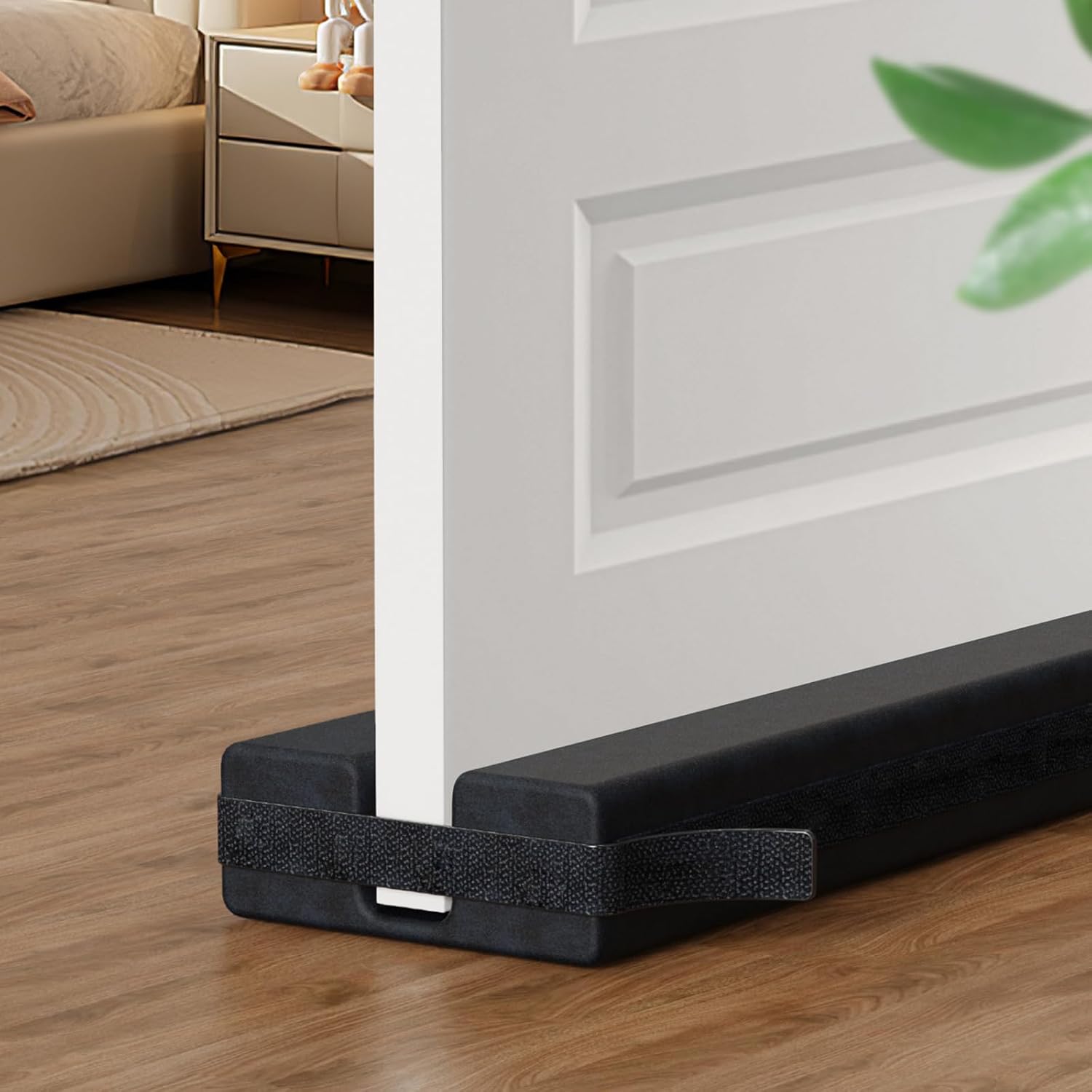
The $10 fix I recommend on every winter service call
ASWEI Under Door Draft Stopper (34.5 inch)
Why this cuts your heating bill
Cold air pouring in under doors is the number one reason I see space heaters running non-stop. A heater fighting a draft never cycles off, which means it draws full power for hours. This draft stopper seals the gap in seconds with no tools. In a drafty room, it can cut your heater runtime in half. Ten dollars to potentially save $20+ per month is the best ROI in home energy.
Check Price on Amazon →As an Amazon Associate, we earn from qualifying purchases.
Infrared Space Heater - Cost Breakdown
| Period | kWh Used | Cost ($) |
|---|---|---|
| Per Hour | 1.5000 | $0.2724 |
| Per Day | 7.50 | $1.36 |
| Per Month (30 days) | 225.00 | $40.86 |
| Per Year (365 days) | 2737.50 | $497.13 |
Running an infrared heater for 5 hours uses about the same energy as making 75 slices of toast in a toaster.
3 Ways to Cut Your Infrared Space Heater Energy Bill
- 🌱
Position the heater to directly face occupied areas — infrared heats objects, not air, so line-of-sight matters.
- 💡
Use the eco mode which alternates between 1500W and 750W to maintain temperature with less total energy.
- ⚡
Pair it with a ceiling fan on low reverse to push rising warm air back down without disrupting the infrared beam.
Infrared heaters use quartz or carbon resistance elements with no motor, so wattage is stable and consistent with no startup surge.
How Much Electricity Does a Space Heater Really Use?
Last Updated: October 2026 | Reviewed by James Vance, Licensed Master Electrician
I get this question every winter without fail, and I always give the same straight answer: a standard 1,500W space heater costs about $0.27 per hour to run at current electricity rates. Run it 8 hours a day and you are looking at roughly $66 per month. That is not a guess. That is basic math.
Here is what most people do not understand. Every electric space heater, whether it is ceramic, oil-filled, or infrared, converts electricity to heat at essentially 100% efficiency. A $30 ceramic heater and a $150 oil-filled radiator both produce exactly 5,118 BTU per hour at 1,500 watts. The difference is not efficiency. It is how they deliver that heat and how comfortable you feel.
Portable electric heaters can be expensive to operate if you use them as your primary heat source. I have seen winter electric bills double when someone tries to heat a whole house with space heaters. I have seen winter electric bills double when someone tries to heat a whole house with space heaters. They are zone heaters, not whole-house heaters. Use them that way and they make sense.
Space Heater Types: What I Tell Customers
All three types use the same electricity at the same wattage. The difference is comfort and heating pattern, not energy cost.
| Type | Power | Coverage | Notes |
|---|---|---|---|
| Ceramic (fan-forced) | 750-1,500W | 100-200 sq ft | Heats fast, cools fast. Best for quick warm-ups. Fan noise bothers some people. Most common type I see. |
| Oil-filled radiator | 700-1,500W | 150-250 sq ft | Slow to heat, stays warm after shutoff. Silent. Better for sustained heating in one room. My pick for bedrooms. |
| Infrared / radiant | 750-1,500W | 100-200 sq ft | Heats objects and people directly, not the air. Feels warmer faster. Good for drafty rooms or spot heating. |
| Micathermic | 750-1,500W | 100-200 sq ft | Combination of convection and radiant. Heats quickly and quietly. Less common but effective. |
Real Cost Examples (18.31c/kWh, EIA July 2026)
A 1,500W heater uses 1.5 kWh per hour at full power. Most heaters cycle on and off with the thermostat, so actual use is typically 60-70% of maximum.
Bedroom heater, 8 hours/night on thermostat
1.5 kW x 8 hours x 65% duty cycle = 7.8 kWh/night. Monthly: 234 kWh = $42.85/month.
Home office, 8 hours/day full power
1.5 kW x 8 hours = 12 kWh/day = 360 kWh/month = $65.92/month. This is the worst case for one heater.
Two heaters heating a living area, 6 hours/evening
3.0 kW x 6 hours x 65% = 11.7 kWh/day = 351 kWh/month = $64.27/month. This is where bills start hurting.
Supplementing central heat (lower thermostat 5 degrees)
Central heat savings from lowering thermostat: roughly $30-50/month. One space heater in occupied room: ~$43/month. Net: you might break even or save slightly. The real win is comfort, not savings.
Trying to heat whole house with 4 space heaters (do not do this)
6.0 kW x 10 hours x 65% = 39 kWh/day = 1,170 kWh/month = $214.23/month. Plus it will not actually keep the house warm. I have seen this bill. It is not pretty.
750W low setting, 4 hours/day
0.75 kW x 4 hours = 3 kWh/day = 90 kWh/month = $16.48/month. Targeted use like this is perfectly reasonable.
How to Calculate Your Space Heater Cost
Step 1: Check the wattage on the label.
Most portable heaters are 1,500W on high and 750W on low. This is printed on the back or bottom. If it only says amps, multiply amps by 120 volts to get watts.
Step 2: Estimate your actual duty cycle.
A heater with a thermostat does not run constantly. In a reasonably insulated room, expect 50-70% duty cycle. In a drafty room, it might run 80-90%. Be honest about your room.
Step 3: Do the math.
Monthly kWh = (watts / 1,000) x hours per day x duty cycle x 30. Multiply by your electricity rate. A 1,500W heater at 8 hours with 65% duty cycle: 1.5 x 8 x 0.65 x 30 = 234 kWh/month.
Step 4: Compare against your central heating cost.
If lowering your thermostat 5 degrees saves $40/month on gas/oil and the space heater costs $43/month in electricity, you are roughly breaking even but more comfortable in the room you actually use. That is a win.
A note on measurement: A plug-in Kill A Watt meter works perfectly for space heaters since they are 120V plug-in devices. This is one of the few appliances on this site where I actually recommend one. You will see exactly how many kWh your heater uses in a day.
Ceramic vs Oil-Filled vs Infrared: The Honest Truth
I need to clear up the biggest myth in space heaters: no type is more energy efficient than another at the same wattage. A 1,500W ceramic heater and a 1,500W oil-filled radiator produce exactly the same amount of heat and use exactly the same electricity. Anyone telling you otherwise is selling something.
What actually differs is how the heat feels. Ceramic heaters with fans warm a room quickly but the heat dissipates fast when they cycle off. Oil-filled radiators take 15-20 minutes to warm up but continue radiating heat after the element shuts off, which means fewer on/off cycles. Infrared heaters warm you directly rather than warming the air, so you feel comfortable at a lower thermostat setting.
In practice, oil-filled radiators tend to have slightly lower duty cycles in well-insulated rooms because of that thermal mass effect. But we are talking about 5-10% difference, not the 30-40% some marketing claims suggest. Buy based on comfort preference and noise tolerance, not efficiency claims.
How to Actually Cut Space Heater Costs
Heat the person, not the room.
This is the entire philosophy of space heaters. Close the door, heat only the room you are in, and let the rest of the house stay cooler. A space heater in a closed bedroom is efficient. A space heater in an open-plan living area with 15-foot ceilings is throwing money away.
Use the thermostat, not the high/low switch.
Most people just flip to high and leave it. Set the thermostat to your comfort level and let it cycle. A heater maintaining 68F uses far less than one blasting on high trying to hit 75F. Every degree matters with resistance heat.
Seal the drafts first.
I have been in homes where a space heater runs constantly because cold air pours in under the door. A $5 door draft stopper can cut your heater runtime in half. Fix the envelope before you blame the heater.
Lower your central thermostat.
The DOE recommends this strategy: lower your whole-house thermostat by 5-10 degrees and use a space heater only in occupied rooms. This works because you are not heating empty bedrooms and hallways. But do the math to make sure you are actually saving.
Do not use extension cords.
This is a safety issue I feel strongly about. Space heaters draw 12.5 amps at 1,500W. Most extension cords are not rated for sustained high-amperage loads. Plug directly into a wall outlet. If the outlet or plug feels hot, stop using it and call an electrician.
Consider a heat pump instead for sustained heating.
If you are running a space heater 8+ hours daily all winter, a mini-split heat pump would cost one-third to one-half as much to operate. The upfront cost is higher, but the payback in a cold climate can be 2-3 years. I mention this because I see people spend $200/month on space heaters who would be better served by a $1,500 mini-split.
Space Heater vs Other Heating Options
Space heater vs central gas furnace: Natural gas typically costs one-third to one-half as much per BTU as electric resistance heat. If you have gas central heat, using space heaters to supplement rarely saves money. The exception is heating one room while keeping the rest of the house very cool.
Space heater vs electric baseboard: Identical efficiency. Both are 100% efficient resistance heat. A space heater is just a portable baseboard. No difference in operating cost at the same wattage.
Space heater vs mini-split heat pump: A mini-split delivers 2-3 units of heat per unit of electricity. A space heater delivers 1:1. For sustained heating, the mini-split costs one-third to one-half as much to run. This is the upgrade I recommend most often.
Ceramic vs oil-filled operating cost: Same wattage means same cost. Period. Buy based on whether you want fast heat (ceramic) or sustained silent warmth (oil-filled). Anyone claiming one type 'uses less electricity' does not understand physics.
Space Heater Energy FAQs
How much does it cost to run a 1500W space heater for 24 hours?
At 18.31 cents per kWh, a 1,500W heater running continuously for 24 hours uses 36 kWh and costs $6.59. In practice, the thermostat cycles it on and off, so expect 50-70% of that, or roughly $3.30 to $4.60 per day.
Do oil-filled heaters use less electricity than ceramic heaters?
No. At the same wattage, all electric heaters use identical amounts of electricity. A 1,500W oil-filled radiator and a 1,500W ceramic heater both draw 1,500 watts. The difference is in heat delivery pattern, not energy consumption.
Is it cheaper to use a space heater or central heating?
It depends on your central heating fuel. If you have natural gas, central heating is typically cheaper per BTU. A space heater makes sense only for zone heating: warming one occupied room while keeping the rest of the house cooler.
How many watts does a typical space heater use?
Most portable space heaters are rated at 1,500 watts on high and 750 watts on low. This is the maximum allowed for a standard 120V/15A household circuit. Larger 240V wall-mounted heaters can draw 2,000-5,000 watts.
Can a space heater increase my electric bill significantly?
Yes. A single 1,500W heater running 8 hours daily adds roughly 234-360 kWh to your monthly bill, or $43-$66 at current rates. I have seen winter bills double when multiple heaters are used as primary heat.
What is the most energy-efficient space heater type?
All electric space heaters are essentially 100% efficient at converting electricity to heat. There is no meaningful efficiency difference between ceramic, oil-filled, infrared, or micathermic types at the same wattage. For true efficiency gains, consider a heat pump.