
How Many kWh Does a Well Pump Use?
Well Pump energy cost calculator - see your exact daily, monthly, and yearly electricity cost.
US national average. Edit for your local rate.
Pump Size Preset
Real-world running watts, not textbook HP figures. Adjust for your pump's nameplate.
Daily Energy Use
1.50
kWh / day
Monthly Cost
$8.17
Yearly Cost
$99.43
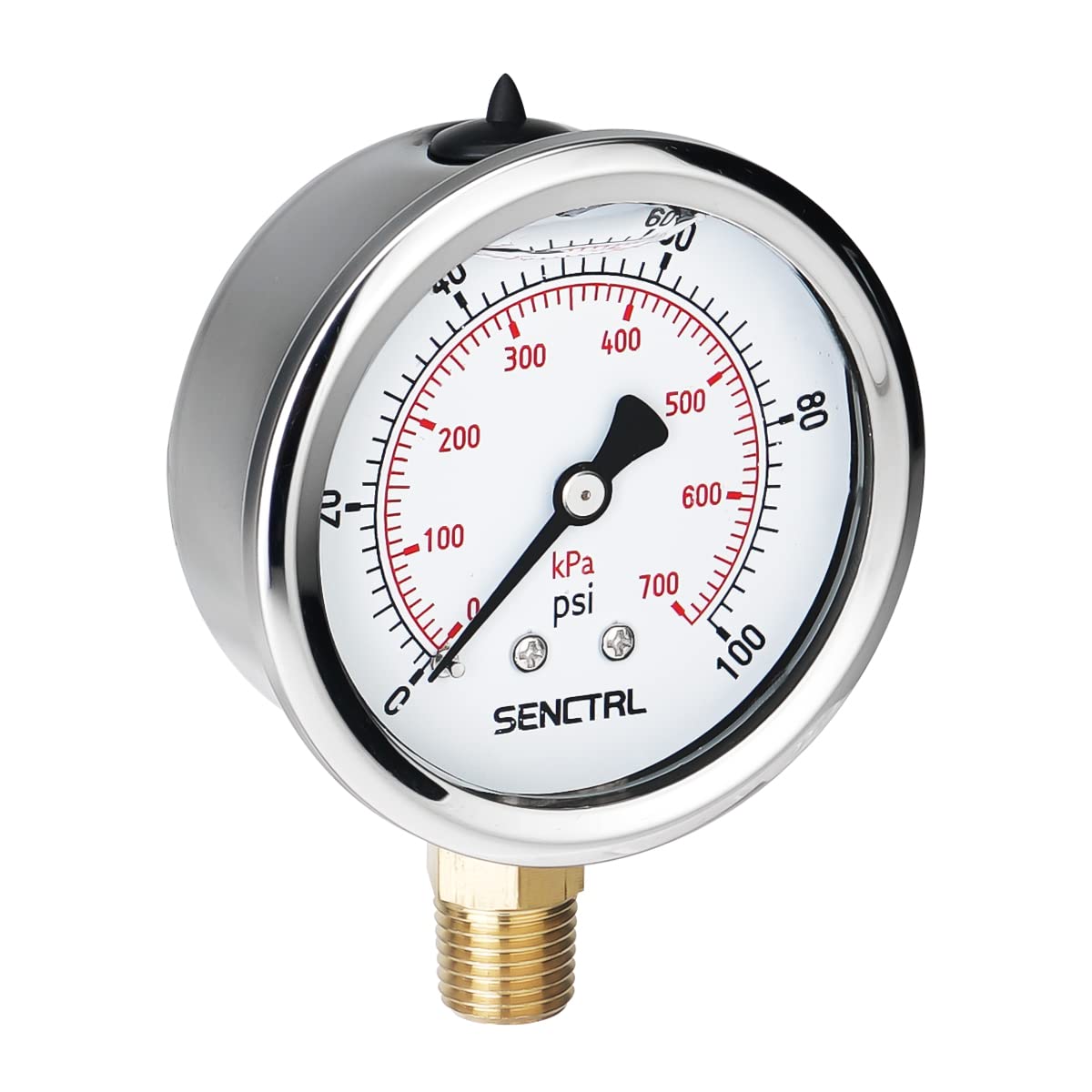
The diagnostic tool I wish every homeowner had
SENCTRL 0-100 PSI Water Pressure Gauge
Why this saves money
I have lost count of how many high electric bills traced back to a well pump running against a failed pressure tank or a hidden leak. A $15 pressure gauge on your tank tee tells you instantly if your system is short-cycling. If the needle bounces rapidly or the pump runs constantly, you have a problem eating electricity. This gauge pays for itself the first time it catches an issue early.
Check Price on Amazon →As an Amazon Associate, we earn from qualifying purchases.
Well Pump - Cost Breakdown
| Period | kWh Used | Cost ($) |
|---|---|---|
| Per Hour | 1.0000 | $0.1816 |
| Per Day | 1.50 | $0.27 |
| Per Month (30 days) | 45.00 | $8.17 |
| Per Year (365 days) | 547.50 | $99.43 |
Running a well pump for 1.5 hours uses about the same energy as running a space heater for 1 hour.
3 Ways to Cut Your Well Pump Energy Bill
- 🌱
Fix any leaking faucets or running toilets — even a small leak can cause the pump to cycle on hundreds of extra times daily.
- 💡
Install a pressure tank with a larger drawdown capacity to reduce the number of pump start cycles per day.
- ⚡
Set the pressure switch to the lowest comfortable range (e.g., 30/50 PSI instead of 40/60) to reduce pump run time per cycle.
The submersible motor draws a surge of 2,000–3,000W at startup for several seconds before settling to running wattage.
Electrical Requirements for a Well Pump (1.5 HP) (NEC 2023)
Last Updated: October 2026 | Reviewed by James Vance, Licensed Master Electrician
| Requirement | Specification | Get It |
|---|---|---|
| Circuit Voltage | 240V (dedicated circuit) | - |
| Minimum Breaker Size | 20A double-pole (2400W ÷ 240V = 10A × 125% = 12.5A (motor per NEC Art. 430)) | Shop breakers |
| Minimum Wire Size | 12 AWG copper (20A double-pole circuit) | Shop wire |
| Receptacle Type | Hardwired (pressure switch + disconnect) | - |
For reference only per NEC 2023. Always confirm with a licensed electrician per your local code.
Well pumps are motors, so Article 430 applies - not the standard continuous-load math. In the field, a 20-amp breaker on 12 AWG is the standard I wire for 1.5 HP pumps, and it handles the startup surge without nuisance tripping.
Well Pump (1.5 HP) Wiring FAQs
What size breaker for a 1.5 HP well pump?
A 1.5 HP well pump consuming 2400W at 240V generally requires a 20-amp double-pole breaker for reliable operation. Well pumps fall under NEC Article 430 as motor loads, which permits breaker sizing above conductor ampacity specifically to accommodate high inrush current during motor startup without nuisance tripping.
What gauge wire for a well pump?
Run 12 AWG copper wire for a 1.5 HP well pump on its dedicated 20-amp circuit. Deep well installations with total conductor length beyond 150 feet should upsize to 10 AWG copper to minimize voltage drop, because persistent undervoltage significantly reduces pump motor lifespan over time.
Why does my well pump breaker keep tripping?
Frequent tripping usually indicates a deteriorating pump motor drawing excessive current, a waterlogged pressure tank forcing rapid start-stop cycling, or undersized conductors causing harmful voltage drop. When the breaker trips repeatedly, hire a licensed electrician to find the real cause instead of installing a larger breaker.
Not sure about distance? Use our Wire Size Calculator and Voltage Drop Calculator to confirm for your run length.
How Much Electricity Does a Well Pump Really Use?
I have wired hundreds of well pumps over 15 years, and here is what I tell every homeowner: a typical residential well pump adds $15 to $40 per month to your electric bill. The exact number depends on your pump's horsepower, how deep your well is, and how much water your household actually uses.
Here is the thing most websites get wrong. They will tell you a 1 HP pump uses 746 watts. That is the textbook number, the theoretical output. In the real world, a 1 HP submersible pump actually draws 1,000 to 1,200 watts from your panel because no motor is 100% efficient. I have clamped my meter on enough of these to know. If you do your math with 746 watts, you will underestimate your bill by 30 to 40 percent.
The formula is simple: watts divided by 1,000, times hours of runtime, times your electricity rate. The tricky part is figuring out how many hours your pump actually runs, because it does not run continuously. It kicks on when the pressure tank drops, runs for a minute or two, then shuts off. Most households see 1 to 3 hours of total pump runtime per day.
Well Pump Types: What I See in the Field
After 15 years of service calls, I can tell you the pump type matters more than the brand name on the box.
| Type | Power | Monthly kWh | Notes |
|---|---|---|---|
| Submersible (most common) | 1,000-2,500W | 60-150 | Sits at the bottom of the well. Water-cooled, quiet, efficient. This is what I recommend for any well deeper than 25 feet. |
| Jet pump (above ground) | 800-2,000W | 50-120 | Sits in your basement or pump house. Louder, less efficient, but easier to service. Only works for shallow wells. |
| Constant pressure / VFD | 500-2,000W (variable) | 40-100 | The smart option. Ramps speed up and down instead of slamming on and off. I have seen these cut energy use by roughly 30% in many installations (actual savings vary by usage pattern). |
| Deep well 2+ HP | 2,500-5,000W | 120-300 | For deep wells (300+ feet) or high-demand households. Needs a 30A circuit. These are the ones that surprise people on their bill. |
Real Numbers From Real Service Calls
These are based on 18.31 cents per kWh (EIA, July 2026) and the actual wattage I measure in the field, not textbook figures.
Typical family: 1 HP submersible, 2 hours/day
1,100W actual draw x 2 hours = 2.2 kWh/day = 66 kWh/month. 66 x $0.1831 = $12.09/month.
Heavy use: 1.5 HP pump, 3 hours/day
1,650W x 3 hours = 4.95 kWh/day = 148.5 kWh/month. 148.5 x $0.1831 = $27.19/month.
The bill shock: 2 HP deep well pump, 4 hours/day
2,400W x 4 hours = 9.6 kWh/day = 288 kWh/month. 288 x $0.1831 = $52.73/month. This is the call I get: 'My bill jumped $50, what happened?' Usually a leak or a running toilet.
Irrigation season: extra 2 hours daily for 3 months
1,100W x 2 extra hours = 2.2 kWh/day extra = 66 kWh/month extra = $12.09/month extra during watering season.
VFD upgrade savings
Going from 66 kWh to 46 kWh/month (about 30% reduction) saves roughly $3.66/month or $44/year. The VFD costs more upfront but pays for itself in comfort alone, let alone energy.
The running toilet disaster
A toilet that runs constantly can keep a 1,100W pump cycling 8+ hours a day. That is 264 kWh/month or $48 extra. I have seen this more times than I can count. Fix your flappers, people.
How to Figure Out Your Pump's Actual Cost
Step 1: Find your pump's real wattage, not the HP rating.
Look at the motor nameplate for amps and volts, then multiply: amps x volts = watts. A '1 HP' pump labeled 9.5A at 240V actually draws 2,280 watts at startup and about 1,100 watts running. The HP rating tells you output power; the nameplate tells you what you pay for.
Step 2: Time your pump's runtime for a day.
This is the part everyone skips. Listen for when your pump kicks on, or check if your pressure switch has an hour meter. A normal household runs the pump 1 to 3 hours total per day. If yours runs 6+ hours, you probably have a leak, and that is an electrical problem too because you are paying for it.
Step 3: Do the math.
Monthly kWh = (actual watts / 1,000) x hours per day x 30. Then multiply by your electricity rate. Use the all-in rate from your bill, not just the supply charge.
Step 4: Sanity-check against your bill.
If the math says $15 but your bill went up $60 after the well was installed, something is wrong. Either the pump is running far more than you think (leak), or the nameplate watts are higher than you assumed. I always tell people: the bill does not lie.
A note on measurement: You cannot use a plug-in meter on a 240V hardwired well pump. If you want exact numbers, have an electrician install a clamp-on ammeter reading or a dedicated submeter on the pump circuit. I do this for customers who want to know precisely, and it takes about 30 minutes.
The Mistake I See Most: Oversized Pumps
Here is something 15 years in the trade has taught me: half the well pumps I encounter are oversized for the household. A contractor puts in a 2 HP pump 'just to be safe' when a 1 HP would handle the load easily. That oversized pump short-cycles, wears out faster, and uses more electricity every time it starts.
Bigger is not better with well pumps. An oversized pump draws more watts per gallon delivered because it operates outside its efficiency curve. It is like using a fire hose to water a flower pot. If your pump was sized by a well driller who asked about your actual water usage, you are probably fine. If it was sized by someone who said 'bigger is better,' you might be overpaying every month.
The right pump matches your well depth, your peak demand (showers + laundry + dishwasher running simultaneously), and nothing more. When I do a service call and see a 2 HP pump serving two people in a ranch house, I know they are leaving money on the table.
What Actually Saves Money (From Someone Who Has Tried It All)
Fix leaks immediately. This is number one by a mile.
A dripping faucet, a running toilet, a leaking irrigation line. Every drop of wasted water is electricity you paid for to pump it. I have seen a single running toilet add $40 to a monthly bill. Walk your property, listen for hissing, check your water meter when nothing is running.
Consider a constant-pressure (VFD) system at replacement time.
I am not a salesman, but I have installed enough of these to know they work. Instead of the pump slamming on at full power and off again, it ramps smoothly. Less energy, less wear, steady shower pressure. Worth it when your old pump dies.
Size your pressure tank correctly.
An undersized pressure tank makes the pump cycle on and off constantly. Every start is a surge of current. A properly sized tank lets the pump run longer, less often. This is a $200 fix that I recommend constantly.
Do not ignore short cycling.
If your pump kicks on every 30 seconds, something is wrong. Usually a waterlogged pressure tank or a bad check valve. Besides the annoyance, short cycling is terrible for the motor and your electric bill. Call someone.
Water during off-peak if you irrigate.
If you run sprinklers off your well, do it overnight or early morning. Not because the pump uses less energy, but because many utilities charge less during off-peak hours. Same water, cheaper electricity.
Maintain your system annually.
Check the pressure tank's air charge, inspect for leaks, listen for unusual pump noises. Fifteen minutes once a year. The number of expensive failures I have seen from neglected $0 maintenance is staggering.
How a Well Pump Compares
Well pump vs city water bill: City water might cost $40-80/month for the water itself. A well pump's electricity at $15-30/month is often cheaper, but you own the maintenance. When the pump dies at year 12, that is a $1,500-$2,500 replacement you would not have with city water.
Well pump vs electric water heater: A water heater uses 300-400 kWh/month. A well pump at 66 kWh/month is a fraction of that. If your bill is high, look at the water heater before blaming the pump.
1 HP vs 2 HP real-world draw: Do not use 746W and 1,492W from the textbook. In my measurements, a typical 1 HP submersible draws about 1,100W running, and a 2 HP draws about 2,200W. Plan your circuits and your budget with real numbers.
Startup surge: A well pump can draw 3 to 5 times its running watts for a fraction of a second at startup. This does not affect your kWh much, but it is why the breaker and wire need to be sized correctly. Undersized wiring on a long run to the well is a fire hazard I have seen firsthand.
Well Pump Energy FAQs
How many watts does a well pump use?
A typical 1 HP residential submersible pump draws 1,000 to 1,200 watts while running, not the 746 watts the textbook says. The textbook figure is mechanical output; the electrical input is higher due to motor inefficiency. Always use nameplate amps times volts for real numbers.
How much does it cost to run a well pump per month?
Most households pay $12 to $30 per month. A 1 HP pump running 2 hours daily at 18.31 cents per kWh costs about $12. Heavy users with bigger pumps or leaks can hit $50+.
Why did my electric bill go up after getting a well?
The three causes I see most: the pump runs more hours than expected (check for leaks), the pump is bigger than needed, or there is a plumbing leak keeping it cycling. A running toilet alone can add $40/month in pump electricity.
Does a well pump run constantly?
No, and if yours does, call someone. A healthy system cycles on and off as the pressure tank fills and drains. Constant running means a leak, a bad pressure switch, or a failed check valve. It will burn out the motor and spike your bill.
How many hours a day does a well pump run?
Typically 1 to 3 hours total for a normal household. Irrigation, leaks, or extra occupants push it higher. If you are over 5 hours with no irrigation, investigate.
Is a variable speed well pump worth it?
In my experience, yes, when your existing pump needs replacement. Many installations see 20-30% energy savings, steadier water pressure, and less wear on the system. I would not replace a working pump just for the upgrade, but at end of life, it is the smart choice.