
How Many kWh Does an Electric Clothes Dryer Use?
Electric Clothes Dryer energy cost calculator - see your exact daily, monthly, and yearly electricity cost.
US national average. Edit for your local rate.
Dryer-Specific Options
Illustrative estimates. Override watts/minutes below as needed.
Per-Load Estimate
3.00 kWh / $0.55 per load
15.0 kWh/week ($2.75/week)
Daily Energy Use
3.00
kWh / day
Monthly Cost
$16.34
Yearly Cost
$198.85
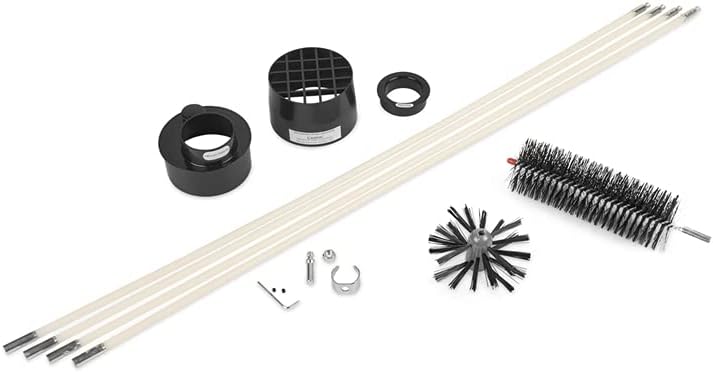
The #1 energy waster I find on service calls
Gardus RLE202 LintEater Rotary Dryer Vent Cleaning Kit
Why this pays for itself
A clogged dryer vent is the single most common reason I see dryers running 2-3 cycles to dry one load. Each extra cycle is another 2-3 kWh on your bill. This kit lets you clean the full vent run yourself in about 30 minutes with a drill. I tell every dryer owner: clean the vent yearly, and you will see the difference in both drying time and your electricity bill.
Check Price on Amazon →As an Amazon Associate, we earn from qualifying purchases.
Electric Clothes Dryer - Cost Breakdown
| Period | kWh Used | Cost ($) |
|---|---|---|
| Per Hour | 3.0000 | $0.5448 |
| Per Day | 3.00 | $0.54 |
| Per Month (30 days) | 90.00 | $16.34 |
| Per Year (365 days) | 1095.00 | $198.85 |
Running a clothes dryer for one cycle uses about the same energy as running 40 LED light bulbs for 10 hours.
3 Ways to Cut Your Electric Clothes Dryer Energy Bill
- 🌱
Clean the lint filter before every load — a clogged filter can increase drying time by 30% and energy use proportionally.
- 💡
Use the moisture sensor setting instead of timed dry — it stops the dryer as soon as clothes are dry instead of running extra.
- ⚡
Dry similar fabrics together — mixing heavy towels with light shirts forces the dryer to run until the heaviest item is dry.
The drum motor draws a brief startup surge of about 4,500–6,000W, but the main energy draw comes from the stable resistance heating element.
Electrical Requirements for an Electric Clothes Dryer (NEC 2023)
Last Updated: October 2026 | Reviewed by James Vance, Licensed Master Electrician
| Requirement | Specification | Get It |
|---|---|---|
| Circuit Voltage | 240V (dedicated circuit) | - |
| Minimum Breaker Size | 30A double-pole (5400W ÷ 240V = 22.5A × 125% = 28.1A) | Shop breakers |
| Minimum Wire Size | 10 AWG copper (30A double-pole circuit) | Shop wire |
| Receptacle Type | NEMA 14-30R (4-prong, grounded) | - |
For reference only per NEC 2023. Always confirm with a licensed electrician per your local code.
In my 15 years in the field, I've seen more dryer problems caused by undersized breakers than anything else. A proper 30-amp circuit is non-negotiable.
Electric Clothes Dryer Wiring FAQs
What size breaker does an electric dryer need?
A standard electric dryer rated 5400W at 240V requires a 30-amp double-pole breaker under NEC 2023. The calculation is simple: 5400 divided by 240 equals 22.5 amps, multiplied by 125% for continuous load equals 28.1 amps, which rounds up to the next standard breaker size available.
What gauge wire for a 30 amp dryer circuit?
Use 10 AWG copper wire for a 30-amp dryer circuit, as this is the minimum size permitted by NEC Table 310.16. When the wire run exceeds 100 feet from the electrical panel, consider upsizing to 8 AWG copper to compensate for voltage drop and keep the heating element operating efficiently.
Can I use a 3-prong or 4-prong dryer outlet?
Every new dryer installation requires a 4-prong NEMA 14-30R outlet under NEC 2023, which provides two hot wires, a neutral, and a separate equipment ground. Older 3-prong outlets remain legal only on circuits installed before 1996. When uncertain about existing wiring, consult a licensed electrician first.
Not sure about distance? Use our Wire Size Calculator and Voltage Drop Calculator to confirm for your run length.
How Much Electricity Does an Electric Dryer Really Use?
A conventional electric clothes dryer uses roughly 2 to 3 kWh per load. The exact number depends on your dryer's wattage, how long the cycle runs, the size and dampness of the load, and whether your dryer has a moisture sensor that stops the cycle when clothes are dry.
The basic formula is straightforward (see our watts to amps guide for the electrical basics):
kWh = Watts x Hours / 1,000
For example, a dryer drawing 3,000 watts for one full hour uses 3.0 kWh. But real dryers do not pull their rated wattage continuously. The heating element cycles on and off as the thermostat maintains temperature, so a "3,000W dryer" running a 45-minute cycle typically consumes around 2 to 2.5 kWh, not the full 2.25 kWh the simple math suggests. The US Department of Energy measures this directly: their test procedure meters actual energy across a standardized cycle rather than multiplying nameplate watts by time.
According to ENERGY STAR, certified standard electric dryers use an estimated 608 kWh per year based on 283 test cycles annually. That works out to about 2.15 kWh per cycle. Your household will differ based on how many loads you run and your dryer's efficiency.
Electric Dryer Types and Their Energy Use
Not all electric dryers consume energy the same way. The technology inside makes a bigger difference than most people expect.
| Dryer Type | Typical Wattage | kWh per Load | Est. Annual kWh |
|---|---|---|---|
| Conventional electric (resistance) | 3,000-5,400W | ~2.1-3.0 | ~608 |
| ENERGY STAR certified (resistance) | 3,000-5,000W | ~2.1-2.4 | ~608 |
| Heat pump (compact) | 800-1,200W | ~0.4-0.5 | ~122-145 |
Annual figures based on DOE test procedure (283 cycles/year). Per-load figures derived from annual estimates. Sources: ENERGY STAR Product Finder, US DOE.
Conventional resistance dryers
Most US electric dryers use a resistance heating element, essentially a large toaster coil, rated around 4,000 to 5,400 watts. The element heats air that tumbles through the clothes, then vents the hot moist air outside. It is simple and dries fast, typically 40 to 60 minutes per load, but every BTU of heat comes directly from electricity with no recovery.
Heat pump dryers
Heat pump dryers work like a refrigerator in reverse. Instead of creating heat with an element, they recycle heat from the exhaust air using a refrigeration cycle. They draw only 800 to 1,200 watts but run longer, often 75 to 120 minutes. The tradeoff is real: far less energy per load, but you wait longer and pay more upfront. They also need no vent, which simplifies installation. Like the mini-split heat pumps we cover elsewhere, the efficiency comes from moving heat rather than creating it.
What changes consumption within the same dryer
Load size, fabric type, and starting dampness matter as much as the dryer itself. A half-load of lightweight synthetics on a sensor cycle might use 1.5 kWh. A packed load of heavy towels on timed high heat can push past 4 kWh. Moisture sensors help significantly because they stop the dryer when clothes reach target dryness instead of running a fixed timer into overdrying.
Worked Cost Examples
These examples use the July 2026 US average residential rate of 18.31 cents per kWh (EIA). Monthly figures use 4.33 weeks per month. Every number below follows directly from the stated inputs.
| Scenario | kWh/Load | Cost/Load | Weekly | Monthly | Annual |
|---|---|---|---|---|---|
| One 60-minute cycle (3000W) | 3.0 | $0.55 | $0.55 | $2.38 | $28.61 |
| 3 loads/week, 45 min each (4000W avg) | 3.0 | $0.55 | $1.65 | $7.14 | $85.82 |
| 5 loads/week, 45 min each (4000W avg) | 3.0 | $0.55 | $2.75 | $11.90 | $142.84 |
| Daily use, 7 loads/week (4000W, 45 min) | 3.0 | $0.55 | $3.85 | $16.66 | $199.97 |
| Heat pump dryer, 5 loads/week (1200W, 90 min) | 1.8 | $0.33 | $1.65 | $7.14 | $85.68 |
| High-rate state ($0.30/kWh), 5 loads/week | 3.0 | $0.90 | $4.50 | $19.50 | $234.00 |
Illustrative scenarios, not universal averages. Your rate and usage will differ.
How to Calculate Your Own Dryer Costs
Step 1: Find your dryer's power rating. Check the nameplate inside the door frame or the user manual. Full-size electric dryers typically list 3,000 to 5,400W for the heating element plus a few hundred watts for the motor and controls.
Step 2: Estimate actual cycle energy. Multiply watts by hours and divide by 1,000, then reduce by 15 to 25 percent to account for the heating element cycling off. Alternatively, use 2 to 3 kWh per load as a planning figure for conventional dryers.
Step 3: Find your true electricity rate. Divide your total bill by total kWh used. Our electricity bill estimator can help you break down the charges. This all-in figure includes delivery charges, which the advertised supply rate omits. If you are on time-of-use billing, note your peak and off-peak rates separately. Check electricity rates by region to see how your state compares.
Step 4: Multiply and scale. Cost per load equals kWh per load times your rate. Multiply by loads per week, then by 52 for annual cost. For monthly estimates, multiply the weekly figure by 4.33.
A note on measurement: A plug-in energy monitor gives the most accurate reading for 120V appliances, but most full-size electric dryers run on 240V hardwired circuits where plug-in monitors cannot be used safely. For 240V dryers, rely on the calculation method above or a clamp meter installed by an electrician. Never attempt to wire measurement equipment into a 240V circuit yourself.
Conventional vs Heat Pump: The Honest Comparison
Heat pump dryers use dramatically less electricity, but the full picture includes purchase price, cycle time, and your usage pattern.
On energy alone, the gap is large. A standard electric dryer at about 2.15 kWh per load versus a compact heat pump at about 0.45 kWh per load means roughly 1.7 kWh saved per cycle. At 18.31 cents per kWh and 5 loads per week, that is about $1.56 saved weekly, or roughly $81 per year.
But heat pump dryers typically cost $300 to $600 more than comparable conventional models, and full-size heat pump options remain limited in the US market. At $81 per year in savings, the payback period runs 4 to 7 years before accounting for the longer cycle times. Households running many loads per week see faster payback; occasional users may never break even on energy savings alone.
Claims of "28% less" versus "50% less" energy appear across different sources because they measure different things: certified compact models against standard models, lab prototypes against production units, or specific test conditions. Treat any single percentage with skepticism unless the comparison basis is stated. The per-cycle kWh figures above, derived from ENERGY STAR's own annual estimates, are the most concrete comparison available.
Practical Ways to Reduce Dryer Energy Use
Clean the lint filter before every load. A clogged filter restricts airflow, forcing the dryer to run longer to achieve the same result. This single habit is the highest-impact, lowest-effort change most households can make.
Use the moisture sensor, not the timer. Sensor cycles stop when clothes reach the target dryness. Timed cycles keep heating after clothes are already dry, wasting energy on every load. If your dryer has both, the sensor setting almost always uses less energy.
Spin laundry at high speed first. A washer's high-speed spin extracts more water mechanically, which costs far less energy than evaporating that water with heat. Every extra minute of spin saves multiple minutes of dryer time.
Dry similar fabrics together. Mixing heavy towels with lightweight shirts forces the dryer to run until the heaviest item is dry, over-drying everything else. Sorting by fabric weight lets each load finish at the right time.
Do not overload, and do not underload either. An overstuffed drum restricts tumbling and airflow, extending dry time. A nearly empty drum wastes most of the heated air. Aim for a comfortably full drum with room to tumble.
Consider when replacement makes sense. If your dryer is 15+ years old, lacks a moisture sensor, and your household runs 5+ loads weekly, a modern ENERGY STAR model can cut per-load energy meaningfully. Calculate the annual savings at your rate and compare against the purchase price before deciding.
Useful Comparisons
Dryer vs washing machine: A typical washing machine uses 0.3 to 0.5 kWh per load, far less than a dryer's 2 to 3 kWh. The dryer is usually the most energy-intensive appliance in the laundry pair by a wide margin.
Dryer vs air drying: Line drying uses zero electricity. If you replace just 2 of 5 weekly dryer loads with air drying, you save roughly 6 kWh per week, or about $57 per year at average rates, with no equipment cost.
Rate sensitivity: At 12 cents per kWh, 5 weekly loads of 3 kWh cost about $94 per year. At 30 cents, the same usage costs about $234. Households in high-rate states have the strongest financial case for efficiency upgrades.
How long to use 1 kWh: A 3,000W dryer consumes 1 kWh in 20 minutes of full-power heating. Because the element cycles, real-world time to accumulate 1 kWh is typically 25 to 30 minutes of cycle time.
Electric Dryer Energy FAQs
How many kWh does an electric dryer use per load?
A conventional electric dryer uses roughly 2 to 3 kWh per load. ENERGY STAR data works out to about 2.15 kWh per cycle (608 kWh per year divided by 283 test cycles). Actual use varies with load size, moisture level, cycle setting, and whether the dryer has a moisture sensor.
How much does one dryer cycle cost in electricity?
At the July 2026 US average of 18.31 cents per kWh, a 3 kWh load costs about 55 cents. In high-rate states near 30 cents per kWh, the same load costs about 90 cents. Your actual cost depends on your utility rate, which you can find on your electricity bill.
How many watts does a typical electric dryer use?
Full-size US electric dryers typically draw 3,000 to 5,400 watts, with about 4,000 watts being a common heater capacity per DOE figures. The heating element cycles on and off during the cycle, so average power over a full load is lower than the nameplate rating.
Does a 240V dryer always use more electricity than a 120V model?
Not necessarily. Voltage determines how power is delivered, not total energy used. A 240V dryer draws more watts but typically finishes faster. Total kWh depends on watts multiplied by time. Compact 120V dryers use less power but run longer, sometimes using similar total energy per load.
Are heat pump dryers actually cheaper to run?
Yes, substantially. ENERGY STAR certified compact heat pump models use an estimated 122 to 145 kWh per year versus about 608 kWh for standard electric models. That works out to roughly 0.4 to 0.5 kWh per load compared to about 2.15 kWh, though heat pump cycles take longer.
How can I find my actual electricity rate on my bill?
Look for the total bill divided by total kWh used, which captures delivery charges and not just the supply rate. Many bills also show tiered or time-of-use rates. Using the all-in per-kWh figure gives a more accurate dryer cost than the advertised supply rate alone.
Sources
- U.S. Department of Energy - Heat Pump Clothes Dryer project (ORNL): energy.gov
- ENERGY STAR Certified Clothes Dryers Product Finder: energystar.gov
- U.S. Energy Information Administration - Electric Power Monthly (residential rates): eia.gov
- DOE Test Procedure 10 CFR Part 430, Subpart B, Appendix D2 (dryer energy measurement)